Delivery App Driving in Gastonia? Your Personal Auto Policy May Not Be Enough. Gastonia has plenty of people using their own cars to make extra money. A few DoorDash runs after work. Grocery deliveries around Dallas or Belmont. Weekend Uber Eats orders near Franklin Boulevard, Cox Road, or the mall area. It can feel simple. You already have a car. You already have auto insurance. You turn on the app and start driving.
The insurance part is where it gets tricky.
In North Carolina, a regular personal auto policy may not cover you once you are using your vehicle for a rideshare or delivery network app. The North Carolina Department of Insurance says personal auto policies do not cover you or your vehicle while it is being used as a public livery or conveyance. That includes delivery network platforms like Uber Eats, Grubhub, DoorDash, Instacart, and Amazon Flex.
Source: North Carolina Department of Insurance delivery and rideshare guidance
That surprises a lot of drivers because they are not carrying passengers. They are carrying food, groceries, packages, or restaurant orders. The issue is not only about passengers. It is about using your personal vehicle for app-based business activity.
The coverage gap can start when you log into the app
The North Carolina Department of Insurance says the exclusion can apply during any period when the insured is logged into a transportation network platform as a driver, whether or not a passenger is in the vehicle. It also includes delivering goods for any delivery network platform.
That means the gray area can start earlier than many drivers think.
You might be sitting in a parking lot waiting on an order. You might be driving toward a restaurant. You might be between deliveries. You might have an order in the car. Different policies and company programs can treat these stages differently, so it is risky to assume your normal policy fills every gap.
That is why disclosure matters. The NC Department of Insurance tells drivers to disclose this work to their insurance company so they can make sure they are properly covered.
But the app gives me insurance
Sometimes, yes. Sometimes, no. Sometimes, only during a narrow part of the delivery.
The app company may offer some coverage during an active delivery. That does not always mean you have full protection for your vehicle, your injuries, or every liability situation. It also may be excess over your own policy, which means your personal auto insurer could still be part of the claim conversation.
If your personal insurer says the delivery work was excluded, the claim can get messy fast.
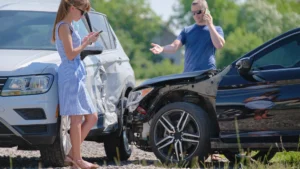
A fender bender on New Hope Road is stressful enough. A denied claim makes it worse. So does finding out after the accident that your own collision, comprehensive, towing, or other voluntary coverages may be at risk because the delivery work was never disclosed.
The NC Department of Insurance warns that failing to disclose this work may lead to denial of potential claims and may jeopardize voluntary coverage like collision, comprehensive, and towing.
Delivery work is still business use
A lot of drivers think business use means a company truck, a contractor van, or a vehicle with decals on the door. Delivery app work can still count as business use even when the car is your personal sedan, SUV, or pickup.
That is the piece people miss.
You are using the vehicle to earn money. You are accepting jobs through an app. You are moving goods for customers. That can change how the insurance company views the risk.
A personal auto policy is usually priced for personal driving. Work commute. School pickup. Grocery runs. Weekend trips. Delivery work adds different patterns. More stops. More parking lot traffic. More time on the road. More driving during meal rushes, bad weather, or evening hours.
Around Gaston County, that might mean cutting across Franklin Boulevard at dinner time, running orders between Gastonia and Cramerton, or taking grocery deliveries toward Belmont, Mount Holly, Dallas, or Kings Mountain. Those trips may feel ordinary, but the purpose of the trip matters.
What coverage should delivery drivers ask about?
Start with a direct conversation. Tell the agent exactly what apps you drive for and when you drive.
Do not say “I use my car for work sometimes” and leave it there. Be specific. DoorDash. Uber Eats. Instacart. Amazon Flex. Spark. Grubhub. Any other platform.
Then ask whether your current policy allows that use. If it does not, ask whether a rideshare or delivery endorsement is available. Some insurers may offer endorsements or different types of automobile policies for this type of driving, according to the NC Department of Insurance.
For some drivers, the answer may be a commercial auto policy. Pegram & Noyes has an auto insurance page that includes coverage options for ride share drivers and commercial auto insurance.
Pegram & Noyes auto insurance: https://pegramandnoyes.com/insurance/vehicle/auto-insurance/
Their commercial auto insurance page explains that commercial auto insurance is for vehicles used for business purposes, including cars, trucks, vans, and specialized vehicles.
Pegram & Noyes commercial auto insurance: https://pegramandnoyes.com/insurance/business/commercial-auto-insurance/
The right fit depends on the carrier, the app, the vehicle, the amount of driving, and how the vehicle is titled. A part-time driver doing a few dinner runs may not need the same setup as someone delivering full time five or six days a week.
Questions to ask before your next delivery shift
Ask these before you turn the app back on.
- Does my current personal auto policy cover delivery app work?
- Am I covered while I am logged in and waiting for an order?
- Am I covered while driving to pick up food or groceries?
- Am I covered while the order is in the car?
- Will my collision and comprehensive coverage still apply?
- Do I need a rideshare or delivery endorsement?
- Would commercial auto insurance make more sense for how often I drive?
- Do I need to send proof of coverage to the delivery platform?
- What happens if I fail to disclose the delivery work?
Those questions are not technical details. They are the difference between a covered claim and a bad surprise.
Do not wait until after an accident
Insurance questions are easier before a claim.
After an accident, the insurer will ask what happened. If the app was on, if you were headed to a pickup, or if you had goods in the car, that can become part of the claim review. Trying to fix the coverage issue after the loss usually does not work.
Be plain with your agent now. If you only deliver once in a while, say that. If you deliver every night, say that too. If you use more than one app, list them all.
The goal is not to make the policy complicated. The goal is to make sure the policy matches the way you actually use the car.
If you drive for DoorDash, Uber Eats, Instacart, Amazon Flex, or another delivery app in Gastonia, Belmont, Dallas, Mount Holly, Kings Mountain, or nearby areas, call our office and we will walk you through your auto insurance options.